Merry (late) Christmas!
Dark SEO is the SEO of the future. But how can we justify the spend with messy attribution?
In this edition:
🕳️ Dark SEO dies in the board meeting
🗞️ Stories to not doomscroll

🕳️ Dark SEO dies in the board meeting
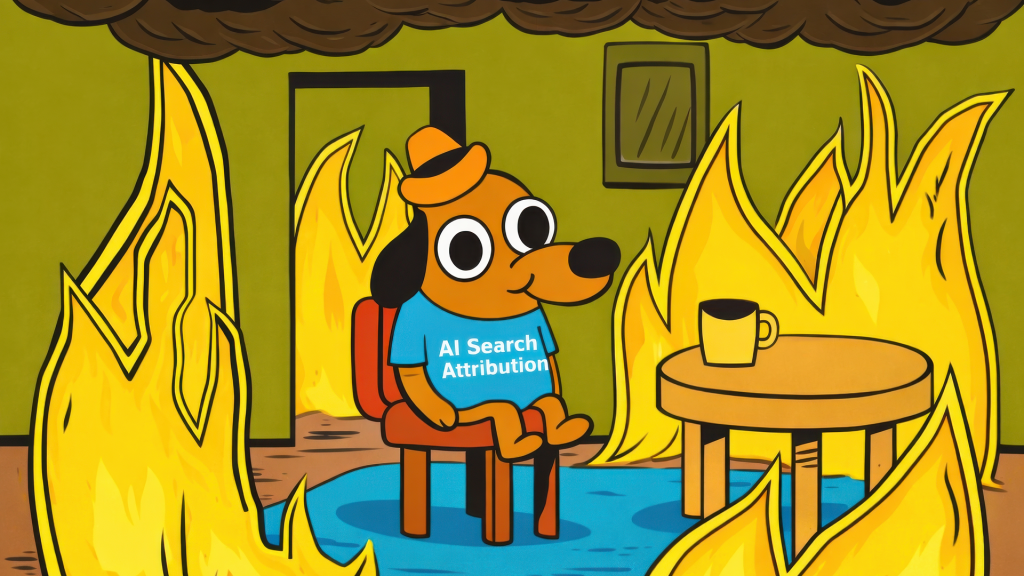
You’ve heard of dark social… but now we have “dark SEO.”
Dark SEO? It’s the new phenomenon of when someone makes a BOFU search, sees a brand recommendation, then goes directly to that brand’s website, where they convert.
It’s making attribution even messier. For one, it makes “organic search” look less valuable as a channel because fewer “SEO conversions” are tracked. And secondly, these conversions are getting attributed to “direct traffic” — a channel where brand marketing usually gets the credit.
But the main problem this creates is: How do you continue to justify SEO investment to your leadership?
Sam Kuehnle is the first marketer I’ve seen break it down in his recent Substack newsletter.
Here are the 3 places it falls apart, and what actually keeps your budget alive.
1) The board asks for ROI, you answer with SEO trivia
- Bad: “Impressions are up 150%, we rank for 47 new keywords.”
- Better: “Organic showed up in 23% of closed deals, brand search is up 48%, that’s $12.34M in pipeline influenced.”
What the board actually accepts: branded search trends + self-reported attribution + pipeline triangulation (CRM + forms + call notes).
2) Your team keeps the old game running
If SEO keeps chasing rankings, content keeps chasing pageviews, demand gen keeps chasing MQLs… you’ll show up to the next board meeting with the same awkward deck.
The new targets:
-SEO measures AI visibility, non-branded impressions, and brand search trends.
-Content measures how often and when content is cited in AI search, especially for BOFU searches.
-Demand gen tracks pipeline impact based on CRM data, self-reported attribution, and sales convos.
3) You measure output instead of revenue impact.
It doesn’t matter how many blog posts you published if you can’t justify the ROI to the CFO.
The fix is simple: audit the last 10 deals and ask, “did our content show up anywhere in the buying process?”
If your CEO is skeptical, don’t pitch Dark SEO as “clicks are dead.” Pitch it as “visibility makes paid and outbound work better,” then prove it with pipeline language.

✨ Society if AI didn’t give people permission to publish slop

We were so close.
🗞️ Stories to not doomscroll
AI Mode and AI Overviews diverge under the hood. They say similar things but cite different URLs and wording, so track and optimize them separately.
Search visibility starts before keyword tools can track them. Spot emerging entities early, validate on social media, then lock in narratives via PR and SEO.
Gemini can now flag Google-AI video edits. It scans for SynthID watermarks to confirm whether content was generated or modified.
Meta may start charging businesses to post links. Some Pages are capped at 2 organic link posts per month unless they subscribe to Meta Verified.
Microsoft says duplicate pages confuse AI search. Consolidate near-duplicates, tighten canonicals and redirects, then use IndexNow to speed recrawls.
Podcast ad spend looks steady going into 2026. Most brands plan to hold or increase budgets as dollars shift toward intent-driven buys.

🤝 Need a hand with your content marketing?
I run Stat Digital, a fractional content marketing team for B2B SaaS companies.
We can help you:
- Create blogs that capture ready-to-buy leads from SEO.
- Launch and run newsletters to nurture the thousands of neglected contacts going stale in your CRM (like this one)
Want to uncover your top opportunities to generate new customers from your content? Schedule a free strategy session here.