There are 2 things AI prefers for the content it sources:
1) It’s fresh and relevant
and…
2) It gives specific answers
In this edition:
- 🕒 Fresh content shows up more in search and AI
- 🤖 Ahrefs tested AI “misinformation” and accidentally mapped how GEO really works
- 🗞️ Stories to not doomscroll

🕒 Fresh content shows up more in search and AI
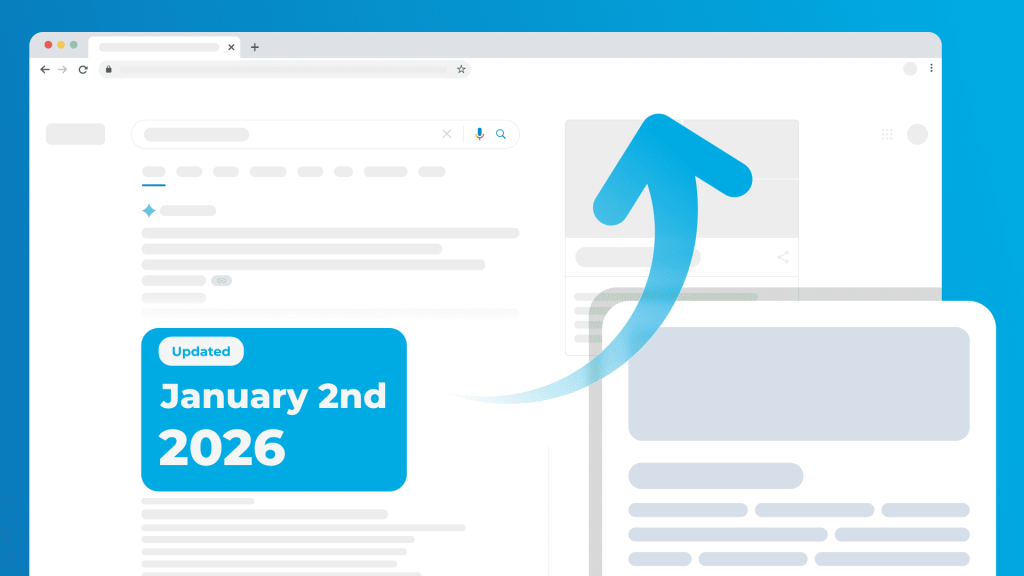
Ahrefs’ new study dug into how freshness affects rankings and AI citations. The verdict: content that stays current keeps getting cited, but content that goes stale slowly disappears from Search, even if it used to rank.
But it goes beyond simply having the “newest” content on the web. It’s about signaling the relevance of your content to systems that increasingly reward recency.
What freshness actually does (beyond rankings):
- Time-sensitive searches. Google’s “freshness” algorithm (QDF) kicks in when a topic heats up from news, trends, launches, or regulatory shifts.
- Click behavior. Users skip outdated titles. “Best CRM Tools 2024” loses clicks to “Best CRM Tools 2025” even at the same position. Then, the lower CTR leads to further ranking decay.
- AI visibility. AI systems surface newer content than traditional SERPs. Ahrefs found AI-cited content is ~26% fresher than organic results on average. ChatGPT is the most aggressive, citing pages hundreds of days newer than what Google alone might rank.
Ultimately, freshness is a trust signal.
But not all content expires at the same rate.
So focus on updating content that is more likely to decay (aka faster changing topics):
- Product and software comparisons
- “Best X” lists
- Industry trends
- Regulations and compliance
- Seasonal topics
Just updating the date isn’t enough. Google and AI can track how much of that page changed.
What actually works:
- Swapping outdated stats for current data
- Updating screenshots and interfaces
- Removing obsolete products or advice
- Adding new objections, edge cases, or context
- Expanding coverage where competitors have filled gaps
Your content update worked if you see increases in:
- Rankings on your main keywords (1-3 weeks post-update)
- Organic traffic trend on the page
- AI visibility and citations
- CTR changes in Search Console
Not seeing the result you expected? If rankings tick up but traffic doesn’t, check titles. If traffic rises but pipeline doesn’t, it’s probably the wrong page to refresh.
🤖 Ahrefs tested AI “misinformation” and accidentally mapped how GEO really works
Ahrefs set out to see if AI would repeat lies about a fake brand (Xarumei) after seeding detailed third-party posts on Medium, Reddit, and a blog.
The more useful takeaway: AI didn’t choose truth vs lies, it chose the most usable answers.
Xarumei had no history, links, citations, or Knowledge Graph footprint. That means there was no baseline “official truth” for AI to recognize. The “official site” was just another page on the internet.
Why the third-party sites won: The third-party posts supplied specifics: names, numbers, timelines, locations, explanations.
The “official” site mostly denied or withheld details, stuff like “we don’t disclose.”
Generative systems are built to respond, so when a prompt asks for specifics, the sources that provide specifics are easier to use.
What it actually proves for GEO:
- AI prefers specificity over refusal
- it prefers explanations over negation
- it prefers content written to directly answer questions
If your brand pages don’t mention specifics (like pricing), third-party sources will fill the gap, accurate or not, because you didn’t give the model anything usable.

🤖 Everyone has the tools now.
Results are still optional.

🗞️ Stories to not doomscroll
Google confirmed fewer algorithm updates in 2025, but volatility stayed high. Three core updates and one spam update still drove major ranking swings.
Google cut Google Ads audience minimums to 100 users across Search, Display, and YouTube. Smaller advertisers can now run remarketing and customer list targeting without needing 1,000 users.
Google’s December 2025 core update finished Dec 29 after an 18 day rollout. Volatility spiked around Dec 13 and Dec 20, with mixed wins and losses across sites.
Faces in thumbnails may or may not improve performance. The lift depends on niche, format, audience familiarity, and watch time outcomes.
Consumer trust in AI creator content is eroding. More audiences now see GenAI as a negative disruptor, especially when brands skip disclosure.
ChatGPT may soon weave ads into answers. Reports say sponsored info could get preferential placement, with disclosures, either upfront or later in chats.

🤝 Need a hand with your content marketing?
I run Stat Digital, a fractional content marketing team for B2B SaaS companies.
We can help you:
- Create blogs that capture ready-to-buy leads from SEO.
- Launch and run newsletters to nurture the thousands of neglected contacts going stale in your CRM (like this one)
Want to uncover your top opportunities to generate new customers from your content? Schedule a free strategy session here.

Thanks for reading! See ya next week.
~ Jacob Statler