According to Google’s long-term goal, GEO shouldn’t have to exist.
But that’s not stopping marketers from trying to spam every GEO hack that pops up on their LinkedIn feed.
In this edition:
- 🤢 B2B has the AI ick
- ⚠️ Google warns against breaking content into chunks for AI
- 🗞️ Stories to not doomscroll

🤢 B2B has the AI ick
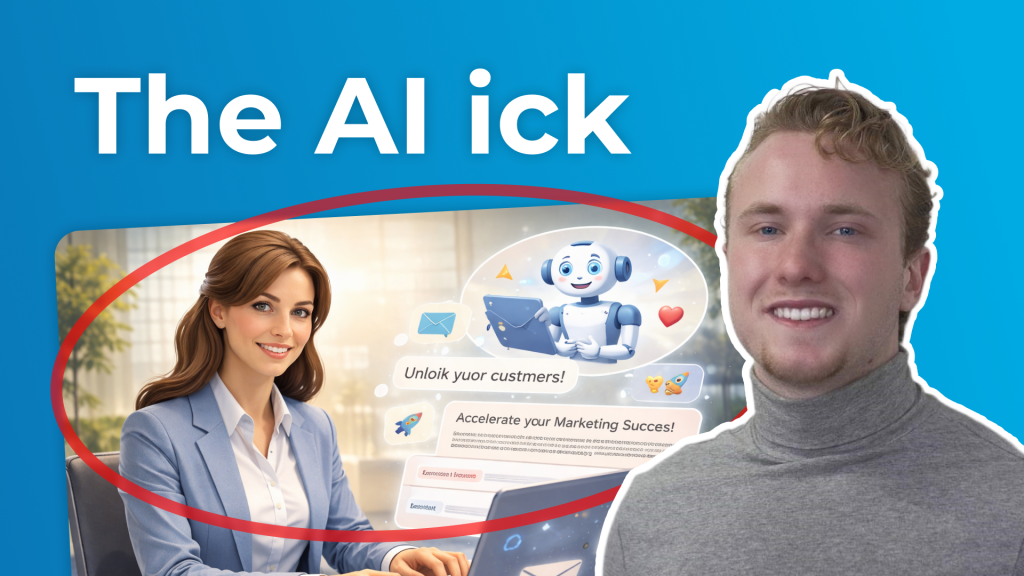
Have you ever looked at your competitor’s content and thought:
“How are they okay with publishing this AI slop???”
Let’s call it the “AI ick.”
- 93% of consumers prefer a human over AI for customer support
- ~50% would cancel if AI-only support was their only option
- 90% of companies think customers are happy with AI, but only 59% of customers agree
The same dynamic is showing up in content.
As AI-generated content floods feeds, generic copy stops working faster because people don’t need more content. They need unique insights based on REAL experience.
More signals worth noting:
- 55% of consumers say they trust brands more when content is human-created
- That jumps to 66% for Gen Z and Millennials
- The top thing consumers want brands to prioritize in 2026: human-generated content
Let’s be honest: it’s VERY obvious when a company is misusing AI.
I think even content that looks like generic AI is becoming a problem in B2B, since most audiences will notice when it just doesn’t sound right (even if it looks okay after a quick skim).
AI being used as a cost-cutter is a legit use case, but it shouldn’t be used to cut corners on your content.
Because if your content looks cheap, your audience will question your entire brand.
Despite everyone saying 2025 was the year of AI agents, I still haven’t seen any agent able to run without constant human oversight.
Remember: Even the best LLM models still hallucinate about 6% of the time (roughly 1 out of 16 responses), which is enough to hurt your brand’s credibility.
⚠️ Google warns against breaking content into chunks for AI
Google is officially pushing back on one of the most popular AI SEO tactics right now.
On the January 8 episode of Search Off the Record, Danny Sullivan warned creators not to break content into bite-sized chunks just to appeal to LLMs. His message: tactics built for ranking systems instead of people don’t survive long.
This was the clearest rejection yet of “LLM-first” content fragmentation.
What Sullivan actually said:
Sullivan addressed advice circulating in the SEO community that claims LLMs prefer short, modular chunks of content:
“We don’t want you to do that. We really don’t. We don’t want people crafting things for Search specifically.”
He said he checked directly with Google engineers before saying it publicly. The concern isn’t that chunking never works, it’s that it’s a short-term exploit of current systems.
And those systems change, wasting effort long-term.
Sullivan acknowledged that some teams might see temporary gains from chunking content specifically for AI systems.
But he framed it this way:
- You optimize for how the system works today
- The system improves
- Everything you built for the old behavior stops working
At that point, you’ve reorganized your content, workflows, and teams around something that no longer matters.
Google’s goal, according to Sullivan, is still the same: reward content written for humans, not content engineered to game extraction systems.

🧪 Trying a new AI marketing tactic

Oh no. …wait. Okay maybe.

🗞️ Stories to not doomscroll
YouTube is now core search infrastructure. AI Overviews cite YouTube videos up to 29.5% of the time.
YouTube now summarizes videos, which makes pure information worthless. Creators win by adding perspective, voice, and meaning that summaries can’t replace.
37% of consumers now start searches with AI, not Google. Frustration with ads and clutter is pushing users toward faster AI answers, forcing brands to stay credible across both AI and traditional search.
AI visibility doesn’t work like SEO. GEO performance depends on probabilistic answers, off-site brand mentions, and metrics that don’t map cleanly to rankings or traffic.
AI Overviews appear less often when users ignore them. Google measures engagement by query type and suppresses summaries where people don’t click or find value.
Influencers speed up buying decisions, not just sales. Across the funnel, influencer involvement shortens decision time by up to 39%.
Influencers reshape perception, not just conversions. Smaller creators, under 100k followers, drive stronger confidence, repeat purchases, and recommendation intent by building trust closer to decision moments.

🤝 Need content marketing that actually gets paying customers?
I run Stat Digital, a fractional content marketing team for B2B SaaS companies.
We can help you:
- Create content that captures ready-to-buy leads from AI Search and SEO.
- Launch and run newsletters to nurture the thousands of neglected contacts going stale in your CRM (like this one)
Want to uncover your top opportunities to generate new customers from your content? Schedule a free strategy session here.